the Prostate
From the outset, it is important to stress that if you are having symptoms related to an enlarged prostate and you haven't yet spoken to your doctor, it is imperative that you do so as soon as possible. These symptoms can include: an urgent and overly frequent need to urinate; waking up frequently during the night to urinate; leaking urine if you cannot reach the toilet in time; weak flow, difficulty starting etc.
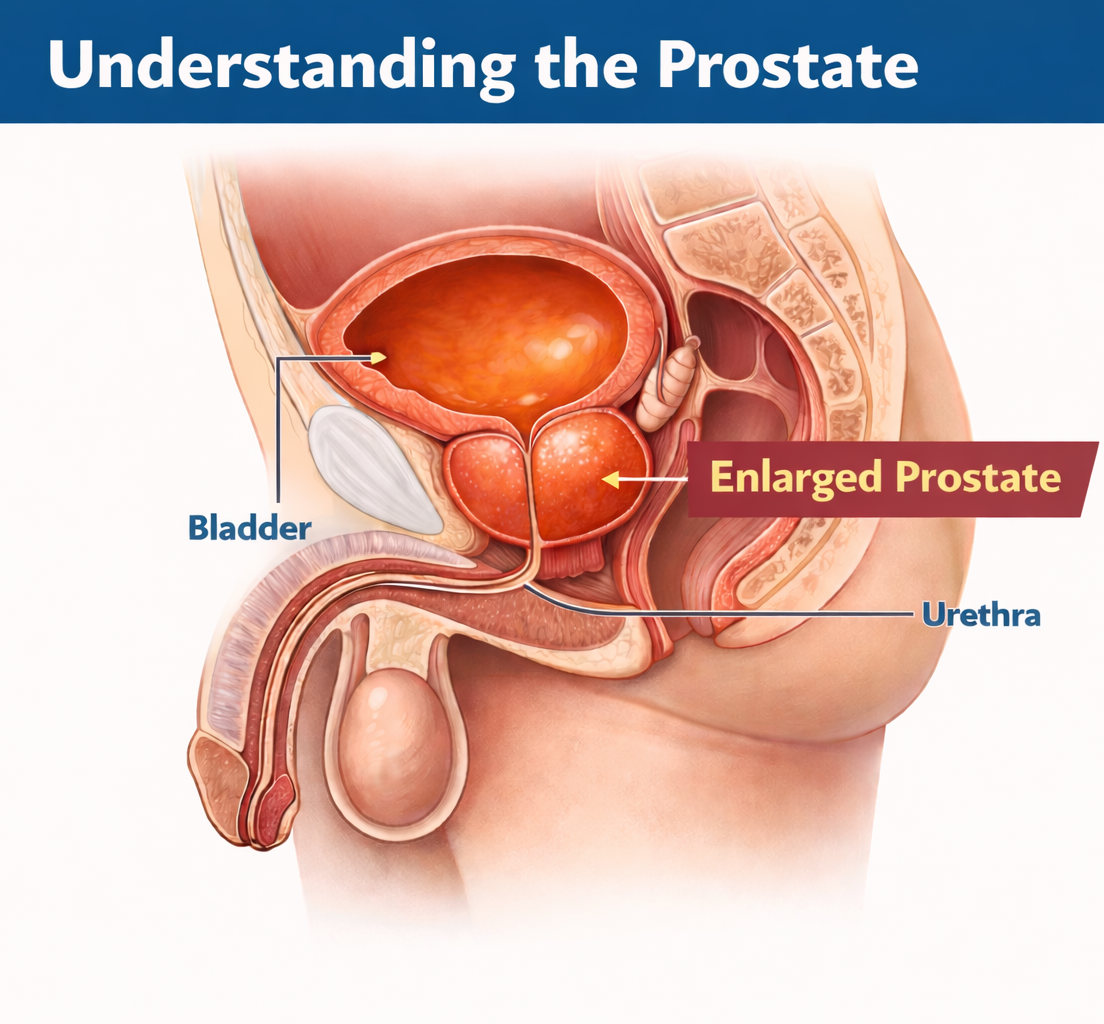
The prostate is a small, walnut-sized gland found just below the bladder in men. It sits around the urethra (the tube that carries urine out of the body) and plays an important role in male reproductive health.
The prostate’s main job is to produce some of the fluid that makes up semen. This fluid helps to nourish and protect sperm. The prostate also contains muscle fibres that help push semen forward during ejaculation.
When the prostate grows, it can press on the urethra and irritate the bladder. This can lead to some of the symptoms mentioned above. BPH becomes more common from around age 45 onwards, and the symptoms often increase with age.
As a nutrition and health coach, I support men with practical diet and lifestyle strategies that may help reduce symptom triggers, improve bladder habits, and support long-term prostate wellbeing naturally.
As men get older, it’s very common for the prostate to gradually enlarge. One of the possible outcomes is Benign Prostatic Hyperplasia (BPH), a condition that can cause frustrating symptoms.